Research

Collecting data that will play a decisive role in conservation efforts for rays and sharks in the Mediterranean.

Studying rays and sharks

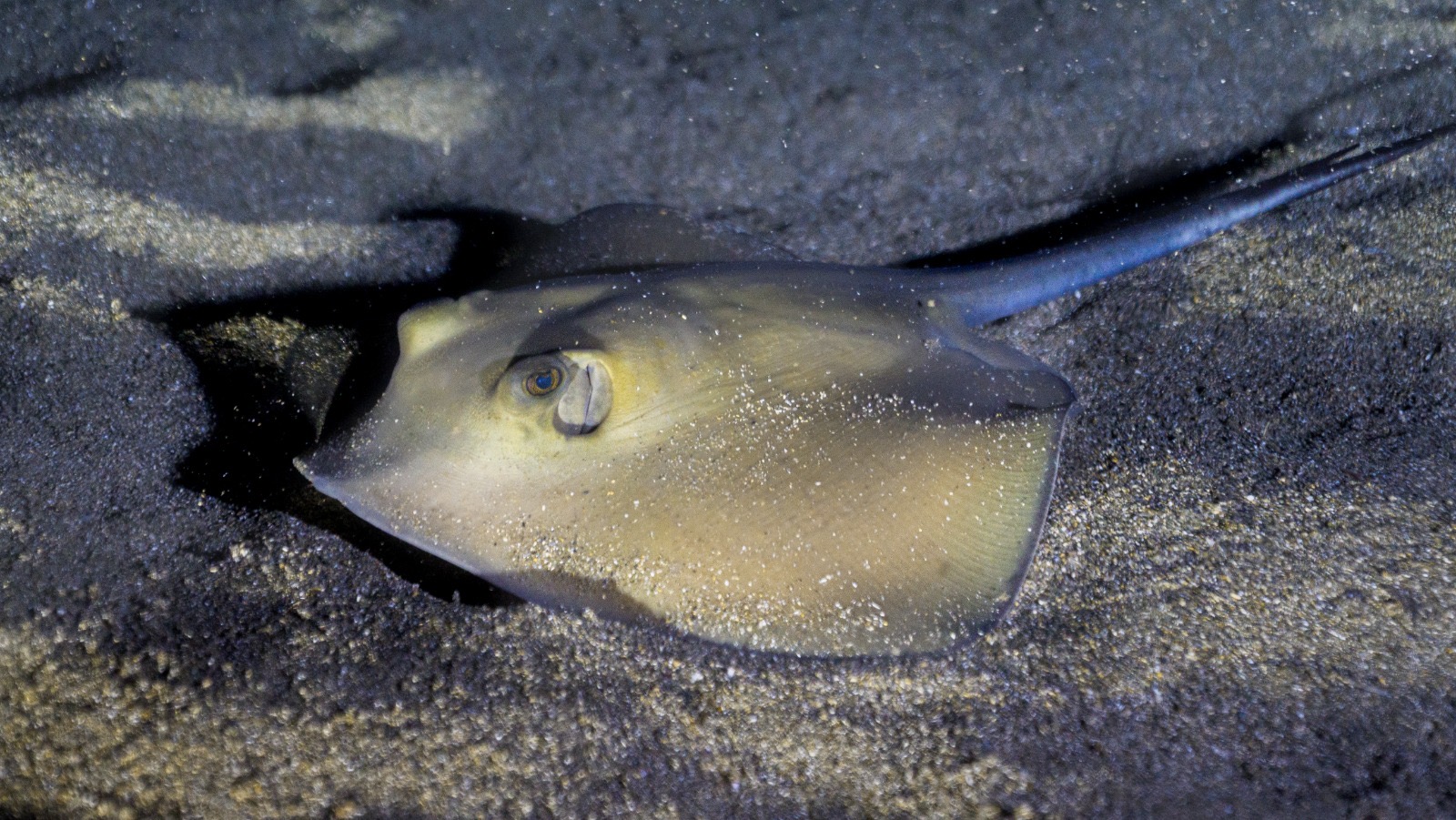
Elasmobranchs (sharks and rays) are among the most endangered marine organisms in the world: overfishing, accidental capture, habitat destruction, climate change, etc. In the Mediterranean, between 53 and 71% of elasmobranchs are threatened with extinction.

However, knowledge about these species is incomplete and heterogeneous.

A high percentage of these species are classified as ‘Data Deficient’ according to the International Union for Conservation of Nature. This means that crucial data on these species is lacking.

©Rémi Démarthon
©Matthieu Lapinski
Why ?

Because they are difficult species to observe and therefore to study.

In France, most of the species listed by the IUCN are not protected, and measures prohibiting the fishing and landing of all vulnerable species should be put in place.

Furthermore, rays and sharks are rarely taken into account in monitoring and conservation programmes.

How ?

There are several approaches to studying rays and sharks.

WHAT IS (e)DNA?

🧬 Environmental DNA

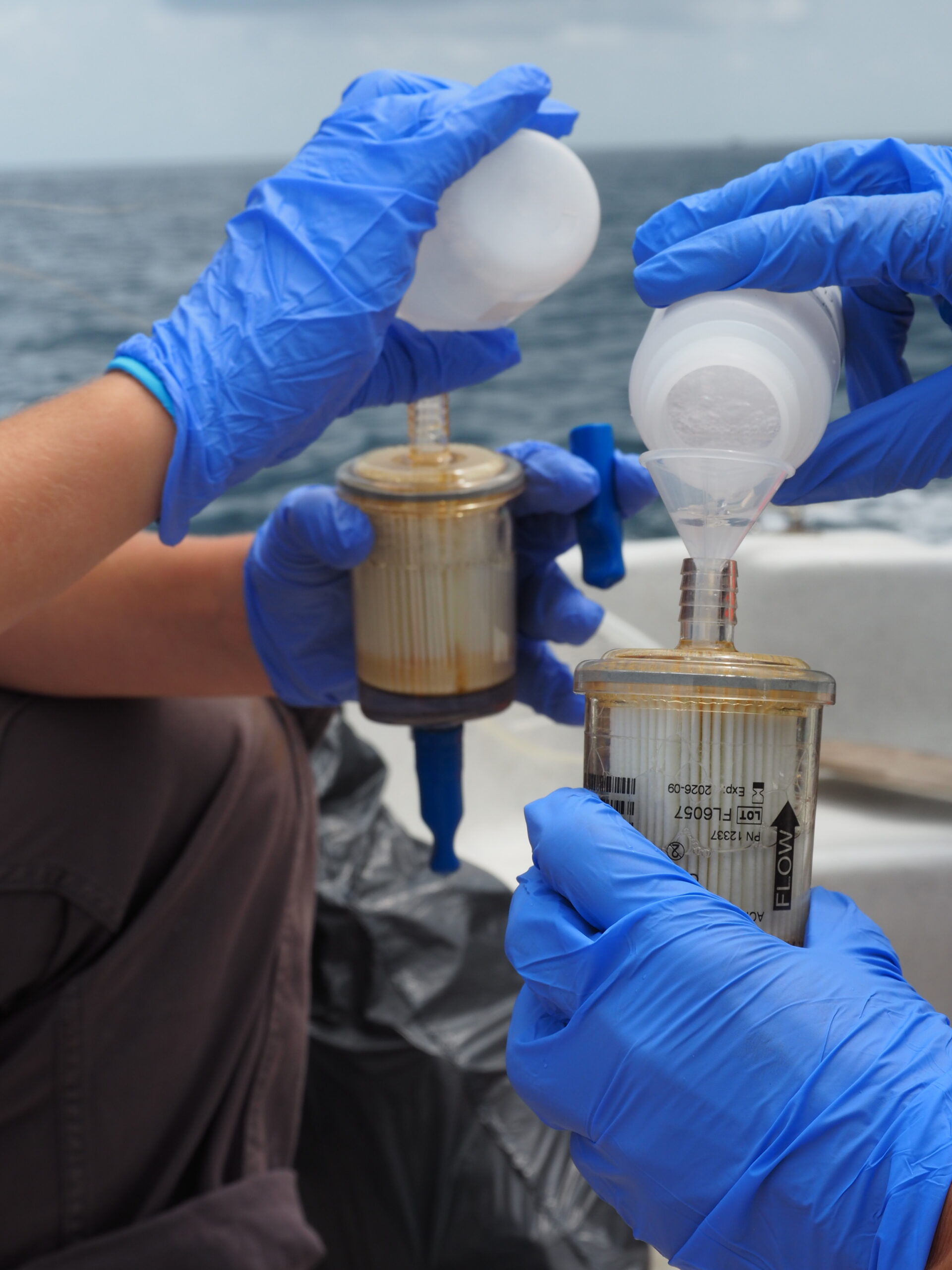
Environmental DNA (eDNA) involves filtering water to analyse DNA released by organisms (dead cells, faeces), enabling species to be identified without the need for observation or capture. This method is non-invasive and can be deployed on a large scale to determine areas of presence and habitats.

However, eDNA does not provide information on the abundance, sex or age of individuals, for example. Furthermore, an individual may be present in the area but not be detected at a given moment.

It is therefore advisable to combine this method with other techniques, such as visual observations or telemetry.

©Julia Morath
WHAT IS TELEMETRY?

Telemetry

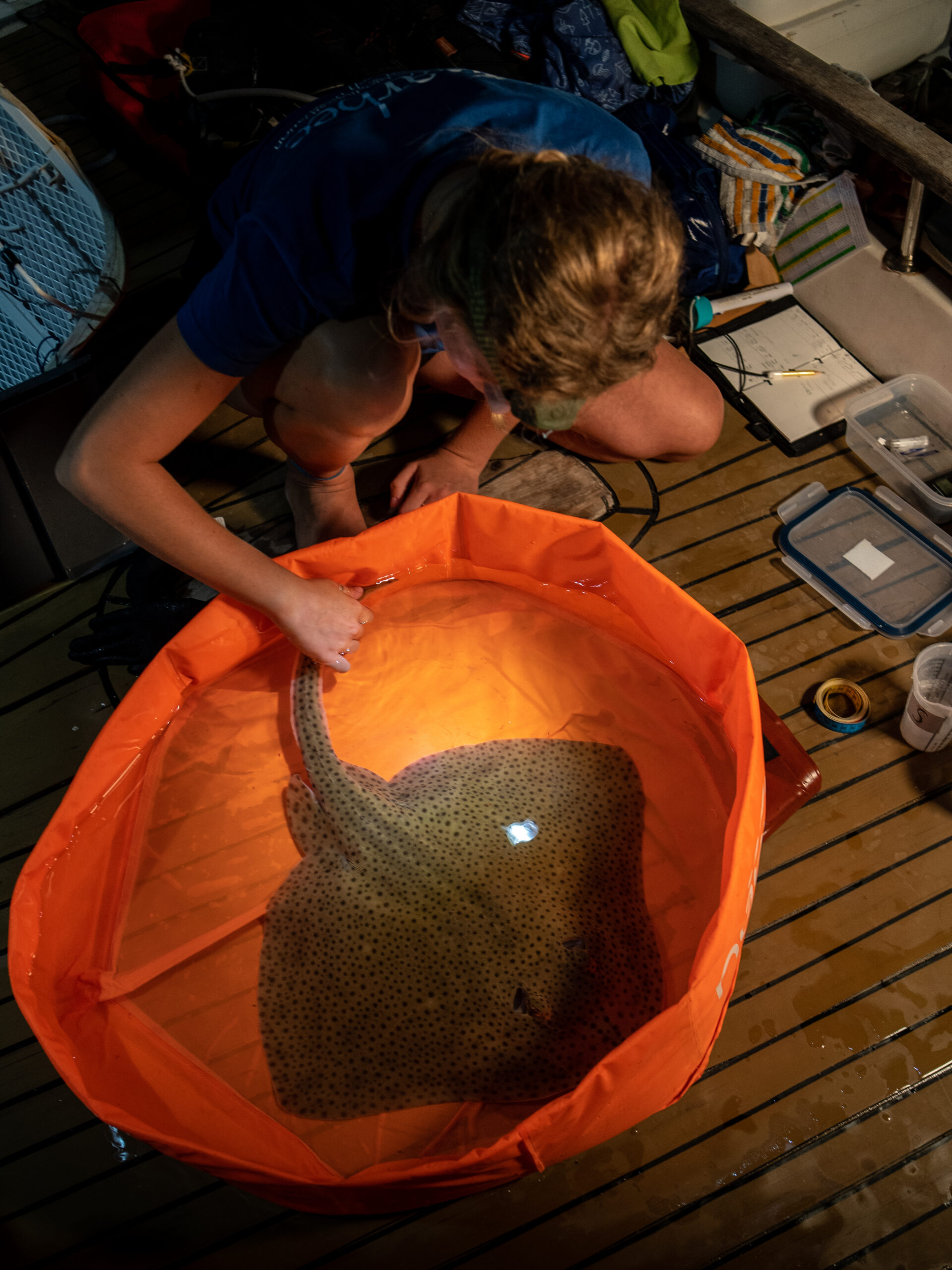
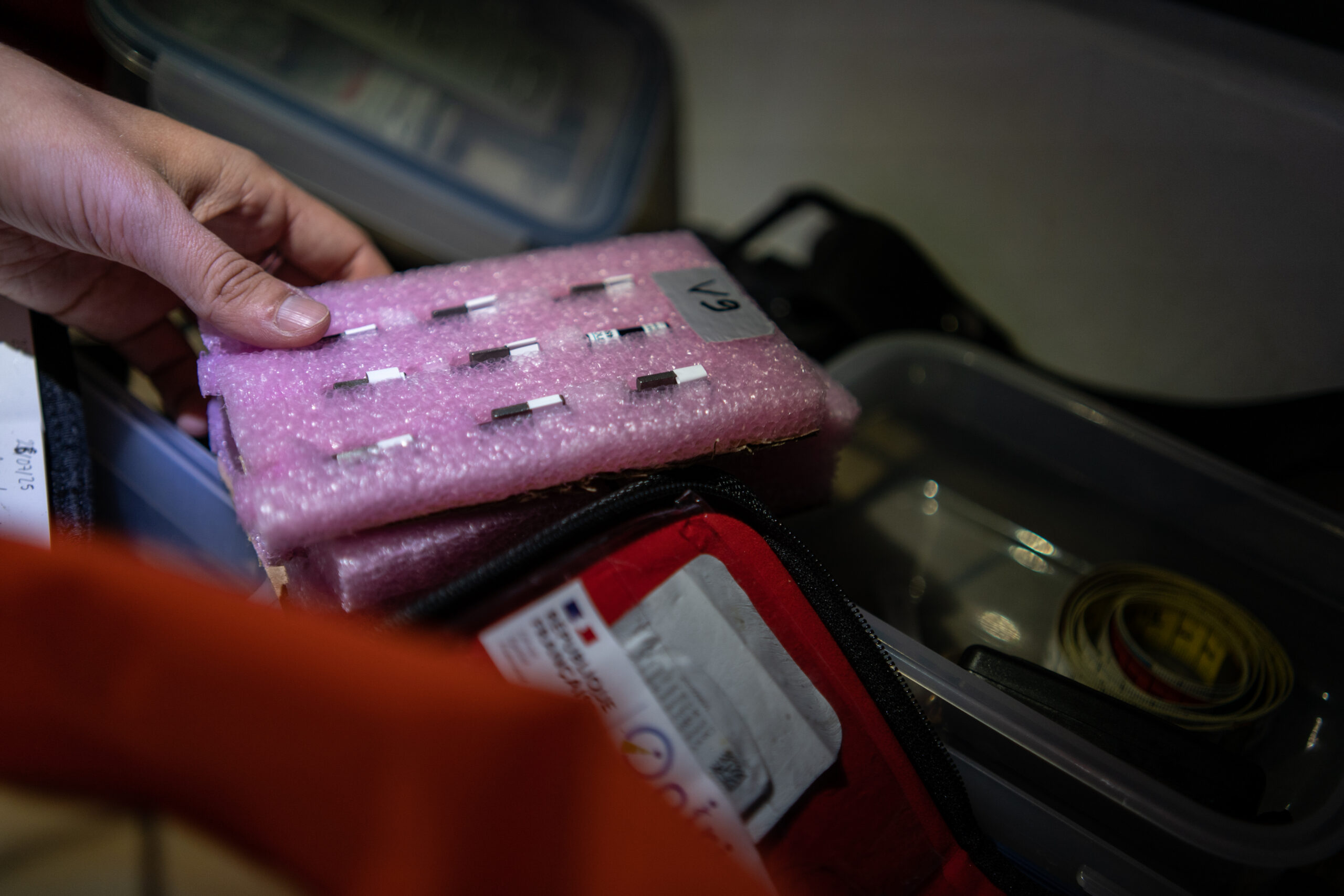
involves attaching an electronic device to an animal that records various parameters (position, speed, temperature, salinity, etc.). There are different methods.

For satellite telemetry, the electronic device emits satellite signals, which are only picked up when the animal surfaces. Data is collected over long distances, but is limited if the animal does not surface often.

For acoustic telemetry, the device emits sound signals that are picked up by hydrophones installed in the study area. This allows the movements and/or activity of tagged individuals to be tracked accurately over the long term, but within a more limited area.

©Thomas Julienne
©Thomas Julienne
Combining several methods

Why ?

These two methods are particularly effective for elasmobranchs, which are difficult to observe, and provide additional data for their study.

Understanding the spatial and behavioural dynamics of these species, their behaviour, and how they use their habitats provides a better understanding of their management and conservation.

Scroll to Top